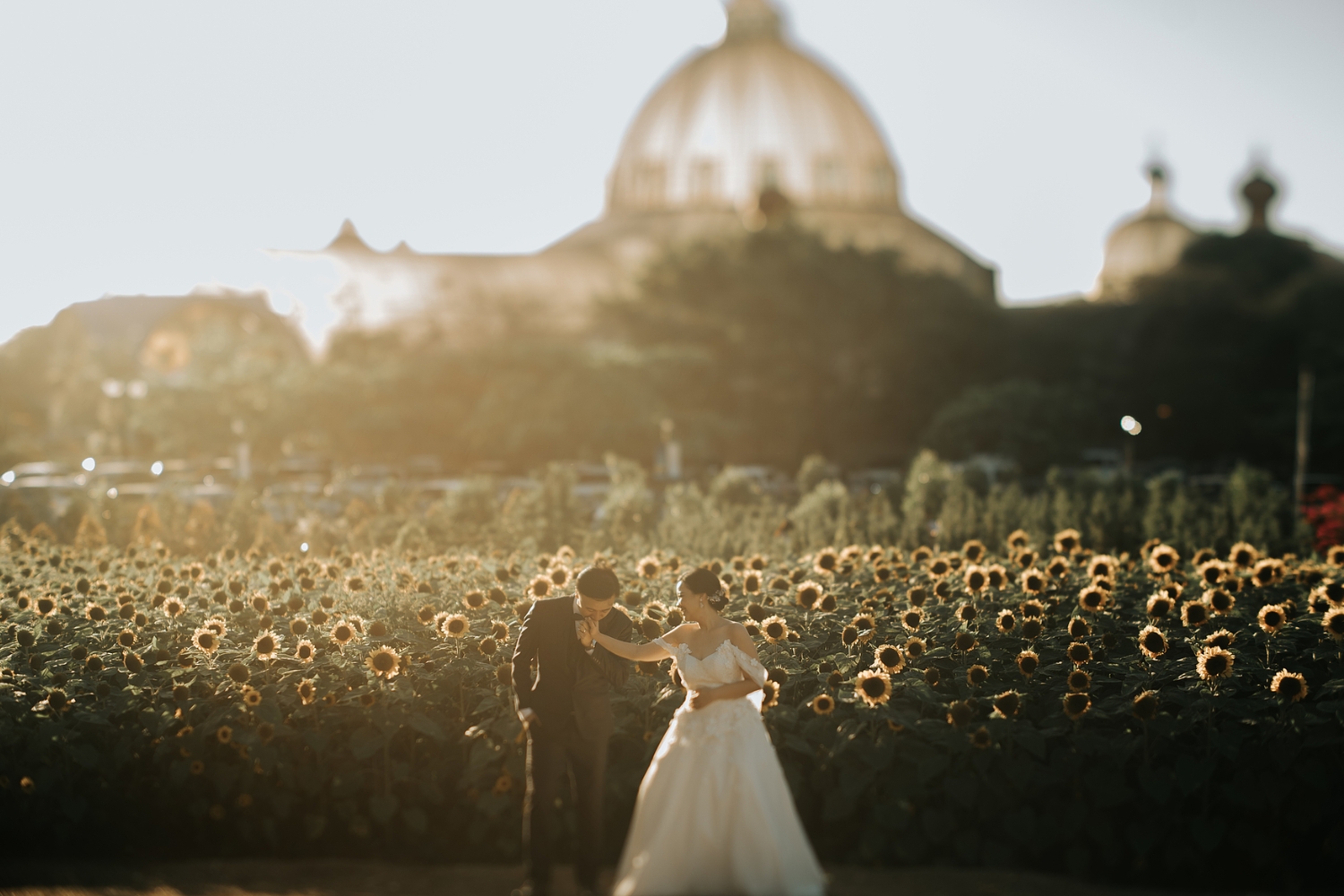
Okay, real talk. I have sat through wedding vows that made me want to crawl under the table. I have also cried at vows written by grooms who told me two hours earlier, “I’m not good with words.” The difference was whether the words sounded like the person at the altar. Writing vows that sound like you. Not like a greeting card.
Why Writing Vows Feels Harder Than It Should
The pressure to be poetic
Skip the myth. You do not need to rhyme. You do not need a metaphor about the ocean. The more you try to sound poetic, the more your vows will sound like every other vow. Your partner is marrying the person who burns the rice. Write like that person.
The fear of crying mid-sentence
You are going to cry. Or your partner is. Or both of you, in front of your lola and your tito and your barkada. That is fine. The only vow that goes wrong is the one you never say. Write it. Read it. Cry through it.
A Simple Structure That Works Every Time
Open with how you met
One or two sentences. A wedding? A bad first date with someone else? Bumble at 2 AM? Lead with the real moment. Vows that start with how you met land better than “from the moment I saw you.”
Share what you love about them
Pick two or three specific things. Not “you’re beautiful.” Pick the weird stuff. The way they chew when they are thinking. They always save the last piece of tocino for you. Specifics feel real. Abstract praise feels like a template.
Make one specific promise
Not five promises. Not a list. One. So concrete that anyone listening knows what you mean. “I will always be the one who drives when you are tired.” “I will fight for us, but I will also learn when to stop fighting.” Small promises stick for thirty years.
Close with where you're headed
End with a line that points forward. A line about the house you want to build, the dog you keep arguing about, the life you are choosing together. Your partner should hear the last line and want to say I do all over again.
Examples From Real Filipino Couples
The funny opening
A friend of mine started with, “I want to begin by saying I still cannot believe you swiped right on me. I had a photo with my eyes half-closed and a caption that said coffee. You had no business matching with me. And yet here we are.” The bride laughed hardest. The rest of his words landed softer because the first line earned the room.
The quiet, sincere version
One bride opened with, “I do not have a beautiful way to say this.” She said, “You are the first person I want to talk to in the morning and the last at night. I have loved you quietly for a long time. I want to love you loudly for the rest of my life.” No flourishes. The room was in pieces.
The bilingual vow
If you grew up speaking Tagalog, Ilocano, Cebuano, or any other language, use it. One couple opened in English, then switched to Filipino for the most important line: “Ikaw ang hinihintay ko.” The grandparents in the front row started crying. The language itself was a gift to the family.
The Edit: Cutting Until It Hurts
Aim for 90 seconds to two minutes
The biggest mistake couples make is writing too much. Three pages of vows is a TED talk, not a love letter. You will lose your place, your voice will crack from exhaustion, and the emotional punch will be gone before you finish. Ninety seconds to two minutes is the sweet spot.
Read it out loud
Words on a page behave differently than words in your mouth. Read your vows out loud at least ten times. Mark the spots where you stumble. If you cannot get through it alone, you will not at the altar.
Get one trusted reader
Pick one person. Not three, not five. One person who knows you both and will tell you the truth. Ask them to flag any line that sounds fake, awkward, or borrowed. Trust the people who love you enough to edit you.
Pro Tip: Your voice will shake. Your hands will shake. You will lose your place at least once. None of that matters. The person in the front row knows what they signed up for. They are not waiting for a performance. They are waiting for you.
Delivering the Vows on the Day
Print them small
Print your vows on a small piece of paper. Not a full sheet. A folded index card or a little printed booklet. The smaller the paper, the more intimate it feels. Big sheets flap in the wind and get caught on your bouquet.
Practice the pauses
Pauses are where the emotion lives. After a heavy line, stop. Take a breath. Let the room feel it. The pause is part of the vow. If you can, mark your paper with little slashes where you want to breathe
Look at your person, not the guests
Look at your partner, not the audience. You are not giving a speech. You are saying words to one person. Your eyes on them, your voice to them. Look at the person you are promising a future to. That is where the moment lives.
Common Mistakes to Avoid
Don't rehearse until you're robotic
Practice enough to know the words. Do not memorize them word for word. Memorized vows sound like a recitation, not a feeling. If you forget a line, skip it. Nobody in the audience has a copy of the script.
Don't apologize for being nervous
Skip the line where you tell everyone you are nervous. They can already see it. Just go. The nerves fade after the first line. Apologizing for them just makes them louder.
Skip the inside jokes nobody else gets
If the joke is so specific that your own mother does not get it, cut it. The audience should be able to follow your vow without a translator. Inside jokes belong in the toasts.
Writing vows is one of the only parts of the wedding that is genuinely, fully yours. Not your coordinator, not your florist, not your ninang. Just you and the words you choose. So take an afternoon. Turn off your phone. The first draft will be terrible. The second will be okay. The third will be the one. And when you are standing at the altar, eyes on the person across from you, you will be thinking about the rest of your life. Go write it.
#BrittanyPalazzo #PalazzoMoments #ExperiencePalazzo #WeddingVows #PersonalVows #WeddingSpeech #ManilaBride #GroomSpeech #WritingVows